
In recent years, the term green packaging has become increasingly important across the food and beverage, retail, and e-commerce industries.
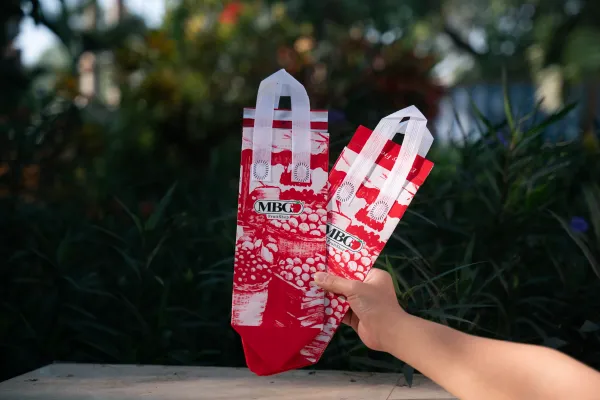
So, what is green packaging?
Green packaging, also known as sustainable packaging, refers to packaging solutions designed to minimize environmental impact throughout their entire lifecycle—from manufacturing and transportation to usage and disposal.
The primary goals of green packaging include:
As environmental awareness grows worldwide, green packaging is rapidly becoming a key component of responsible business practices.
Environmental concerns such as climate change, plastic pollution, and resource depletion are encouraging businesses to rethink their packaging strategies.
Today's consumers increasingly evaluate not only the quality of products but also the environmental responsibility of the brands they support.
Companies that adopt sustainable packaging often gain significant advantages, including:
Green packaging is no longer just an environmental choice—it has become a strategic business decision.
A packaging solution may be considered environmentally friendly if it meets one or more of the following criteria.
Materials derived from renewable resources, such as paper and plant-based fibers, are preferred over conventional plastics.
The packaging can be collected, processed, and transformed into new materials.
Some sustainable packaging products can naturally decompose under suitable environmental conditions.
Efficient design minimizes material usage while maintaining performance and durability.
Manufacturing and logistics processes are optimized to reduce greenhouse gas emissions.
Paper cups are among the most widely adopted alternatives to single-use plastic cups.
Benefits include:
Learn more:
https://papergco.com/paper-cups.html
Custom printed paper cups help businesses strengthen brand recognition while maintaining a professional appearance.
Learn more:
https://papergco.com/custom-printed-paper-cups.html
These cups provide improved insulation while offering a natural and environmentally friendly appearance.
Learn more:
https://papergco.com/double-wall-kraft-paper-cups.html
Paper straws are increasingly replacing plastic straws across cafés, restaurants, hotels, and beverage brands.
Benefits include:
Learn more:
https://papergco.com/paper-straws.html
https://papergco.com/3-layer-paper-straws-6mm-8mm-12mm.html
Kraft paper bowls are a popular takeaway food packaging solution for restaurants and food-service businesses.
Learn more:
https://papergco.com/kraft-paper-bowls.html
Paper bags are widely used in retail, food service, fashion, gift packaging, and e-commerce applications.
Learn more:
https://papergco.com/paper-bags.html
ESG (Environmental, Social, and Governance) has become a major focus for organizations worldwide.
Adopting green packaging can support ESG objectives in several ways.
For many organizations, sustainable packaging is an important step toward achieving broader ESG goals.
The food and beverage sector is one of the fastest-growing adopters of environmentally friendly packaging solutions.
Current trends include:
These trends are expected to continue expanding over the coming years.
Businesses can begin their sustainability journey with practical steps such as:
Small changes can make a significant difference when implemented consistently across operations.
To explore sustainable paper packaging solutions, visit:
The packaging industry continues to evolve through innovations such as:
As governments, businesses, and consumers place greater emphasis on sustainability, green packaging is expected to play an increasingly important role in the global economy.
Green packaging is becoming a fundamental part of modern business operations. Beyond reducing environmental impact, sustainable packaging helps strengthen brand value, improve customer perception, and support long-term business growth.
Products such as paper cups, paper straws, kraft paper bowls, and paper bags are increasingly recognized as practical alternatives to traditional plastic packaging and are helping drive the transition toward a more sustainable future.



VNtech Group Joint Stock Company
ĐKKD: 2301222024 do sở KH&ĐT HÀ NỘI cấp ngày: 06/10/2022
Đăng ký lần đầu, ngày 06 tháng 10 năm 2022.
Connect