As businesses and consumers seek environmentally responsible alternatives to single-use plastics, paper cups have become one of the most widely adopted packaging solutions.
However, many people still ask:
Are paper cups biodegradable?
The short answer is yes, paper cups are partially biodegradable because they are primarily made from paper fibers. However, the speed and completeness of decomposition depend on the cup's materials, coatings, and disposal conditions.
Understanding how paper cups break down can help businesses make more informed packaging decisions.
A biodegradable material can be broken down naturally by microorganisms such as bacteria, fungi, and other living organisms.
Over time, these materials decompose into natural substances including:
The decomposition process helps reduce long-term waste accumulation compared to conventional plastics, which can remain in the environment for hundreds of years.
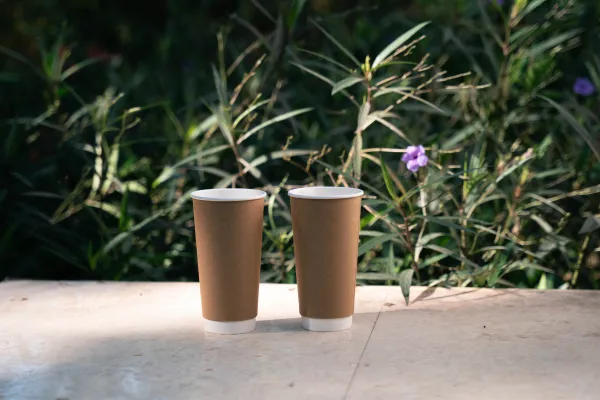
Paper cups are primarily manufactured from paperboard, which naturally biodegrades over time.
When exposed to suitable environmental conditions, microorganisms gradually break down the paper fibers.
Factors affecting decomposition include:
Under favorable conditions, paper fibers decompose much faster than traditional plastic materials.
Many paper cups contain a thin internal lining that provides leak resistance.
Common lining materials include:
PE is a plastic-based coating that prevents liquid from soaking through the paper.
While the paper portion can biodegrade, the PE layer takes significantly longer to break down.
Some eco-friendly paper cups use PLA lining derived from renewable plant materials.
Under industrial composting conditions, PLA-lined cups may decompose more efficiently than conventional plastic-lined cups.
Many people confuse biodegradability with recyclability, but they are not the same.
A biodegradable product can naturally decompose through biological processes.
A recyclable product can be collected, processed, and transformed into new materials.
A paper cup may be:
The exact characteristics depend on the cup's design and materials.
There is no single answer because decomposition depends on environmental conditions.
Generally:
This is why proper waste management remains essential for maximizing environmental benefits.
Across the food and beverage industry, companies are increasingly replacing plastic cups with paper alternatives.
Key reasons include:
Customers increasingly prefer environmentally responsible packaging.
Many organizations have established sustainability and waste-reduction targets.
Eco-friendly packaging can strengthen customer trust and brand perception.
Many regions are introducing measures to reduce single-use plastic consumption.
Today's market offers a variety of paper cup solutions for different business needs.
Suitable for cafés, offices, restaurants, events, and takeaway services.
Learn more:
https://papergco.com/plain-paper-cups-12oz-16oz-22oz.html
An excellent option for businesses looking to enhance brand visibility.
Learn more:
https://papergco.com/custom-printed-paper-cups.html
Designed to provide better insulation and a premium eco-friendly appearance.
Learn more:
https://papergco.com/double-wall-kraft-paper-cups.html
Businesses aiming to reduce environmental impact should consider:
By combining sustainable packaging choices with responsible disposal systems, businesses can significantly reduce their environmental footprint.
To explore paper cups and other eco-friendly packaging products, visit:
The packaging industry continues to innovate with:
As sustainability becomes a priority worldwide, paper cups are expected to remain a key component of environmentally responsible food and beverage packaging.
Paper cups are generally biodegradable because they are primarily made from paper fibers. However, the presence of waterproof linings and local waste management conditions can affect how quickly and completely they break down.
For businesses seeking sustainable beverage packaging, paper cups provide an effective balance of functionality, branding opportunities, recyclability, and environmental responsibility.



VNtech Group Joint Stock Company
ĐKKD: 2301222024 do sở KH&ĐT HÀ NỘI cấp ngày: 06/10/2022
Đăng ký lần đầu, ngày 06 tháng 10 năm 2022.
Connect